Navigator
Facebook
Search
Ads & Recent Photos
Recent Images
Welcome To Roj Bash Kurdistan 

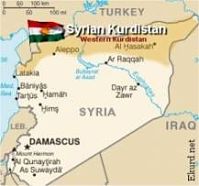
Kurdistan forces are liberating Western Kurdistan

A place for discussion and exchanging ideas about Kurdistan issues here, also a place for sharing article & views and analysis about Kurdistan .

Halabja support for Rojava kurds

PostAuthor: brendar » Mon Aug 13, 2012 9:32 pm

Image

Image
User avatar
brendar
Shaswar
Shaswar
 
Posts: 2073
Joined: Sun Oct 30, 2011 8:28 pm
Highscores: 0
Arcade winning challenges: 0
Has thanked: 948 times
Been thanked: 1382 times

Halabja support for Rojava kurds

Sponsor

Sponsor
 

Op-Ed: Kurdish areas in Northern Syria seek autonomy

PostAuthor: brendar » Mon Aug 13, 2012 9:39 pm

Image

Damascus - Kurdish areas in Northern Syria seek to establish autonomy and to defend their own interests rather than joining the rebel cause. Kurds in the area are being provided weapons and training by the Peshmerga Kurdish militia in neighboring northern Iraq.

The Assad regime is pulling its armed forces out of Kurdish dominated areas in northern Iraq. Turkey is now not only facing a huge influx of refugees along its border with Syria but also the possibility of a virtually autonomous Kurdiish area contiguous with Kurdish areas of Turkey and also northern Iraq. This will give the Kurds hopes of eventually establishing an independent Kurdistan. Kurds inhabit parts of Iraq, Syria, Iran and Turkey.

The move by Assad to cease operations against the Kurds will enable the outlawed PKK to use northern Syria as another base for operations into Turkey. The PKK already operates out of bases in northern Iraq. While some reports say that Assad's forces were driven out by Kurdish fighters others indicate that Assad decided to cede control to those areas so that he could concentrate his forces in attacks on Aleppo. The move also creates problems for Turkey. Turkey has been supporting the rebels, allowing rebels to train in some areas and also allowing the transfer of weapons to the rebels through its borders with U.S. aid and blessings it would seem. Othman Ali who heads a Turkish-Kurdish Studies Center inside Iraq writes:

“Turkey cannot afford to see the PKK roam freely in Syria and use it as a base from which to launch armed attacks on the country...The Syrian president had decided it was time to play the PKK card against Turkey once again as was its policy in the 1990s,”

These developments may lead to Turkish military incursions into Syria. Indications are that Turkish troops are being moved towards the Syrian border.
Ilnoor Shafiq a Turkish analyst said that Turkey would not launch any large scale operation into Syria without international support. Shafiq claimed
:“If there are any incursions by Kurdish fighters across the border, Turkey might respond with by pursuing them, but we will not see any large scale operation taking place,”
Turkish prime minister Erdogan had warned about developments in Northern Syria saying:
“We will not let the terrorist group [PKK] … set up camps [in northern Syria] and pose a threat to us..No one should attempt to provoke us. We will not bow to provocation but rather take whatever steps are necessary against terrorism.”

Erdogan claimed that the rebel Syrian National Council (SNC) is the legitimate representative of the Syrian people. The group is headed by a Kurd. Erdogan continued:
“Any such state there [in northern Syria] could not be seen as the Kurdish people’s own state. It would rather be a state of the terrorist PKK and the PYD.”
Leaders of the Kurds in Northern Syria have a quite different view. A senior but anonymous figure in the Kurdish Syrian opposition said to the Jewish newspaper Haaretz:

"We cannot depend on the fact that the Syrian National Council will be willing or able to ensure Kurdish rights in Syria after the fall of Assad,...We will take care of ourselves just as the Kurds in Iraq took care of themselves when they decided to set up an autonomous region, which is independent of the Iraqi government."

The Kurds are not united. Many support the rebels and the Syrian National Council. The head of the Council, a Kurd himself, has been attempting to convince Kurds to join with the opposition and support a multi-ethnic Syria rather than an autonomous or independent state. However militant Kurds in northern Syria obviously have quite different ideas and are pressing for autonomy and ultimately no doubt a greater Kurdistan encompassing areas in several countries.

http://www.digitaljournal.com/article/3 ... mments&sc=
User avatar
brendar
Shaswar
Shaswar
 
Posts: 2073
Joined: Sun Oct 30, 2011 8:28 pm
Highscores: 0
Arcade winning challenges: 0
Has thanked: 948 times
Been thanked: 1382 times

Traveling to meet the Kurds in Syria 13/08/12

PostAuthor: brendar » Mon Aug 13, 2012 10:02 pm

User avatar
brendar
Shaswar
Shaswar
 
Posts: 2073
Joined: Sun Oct 30, 2011 8:28 pm
Highscores: 0
Arcade winning challenges: 0
Has thanked: 948 times
Been thanked: 1382 times

Re: Kurdistan forces are liberating Western Kurdistan

PostAuthor: brendar » Tue Aug 14, 2012 2:27 pm

PKK: The Hawler agreement between PYD and KNC is a historical step for the unity of the Kurds in Rojava.

http://www.aknews.com/ku/aknews/4/321803/
User avatar
brendar
Shaswar
Shaswar
 
Posts: 2073
Joined: Sun Oct 30, 2011 8:28 pm
Highscores: 0
Arcade winning challenges: 0
Has thanked: 948 times
Been thanked: 1382 times

American Professor: Syrian Kurds Need to Redefine their Ambi

PostAuthor: brendar » Tue Aug 14, 2012 2:37 pm

Image

TENNESSEE, United States — In an interview with Rudaw, Michael Gunter, professor of political science at Tennessee Technological University and the author of six books and hundreds of scholarly articles on the Kurds, addressed recent developments in Syrian Kurdistan.

Professor Gunter, who is also the secretary general of the EU Turkey Civic Commission, offered his opinion on the Turkish threats of invading Syrian Kurdistan, the possibility of a Kurdish state or autonomous region and EU/U.S. views on the area.

Turkey will not invade Syria

One of the consequences of the Syrian uprising has been the growing aspirations for an autonomous Syrian Kurdistan. These political aspirations have greatly worried Turkey, to the point that it has threatened to militarily intervene in Syrian Kurdistan.

But Gunter undermined the threats, saying, “I do not think Turkey would actually risk invading Syria.”

“However,” he continued, “Turkey will certainly use diplomacy to further its interests. Given Turkey’s relative power, its diplomacy and soft power are forces to be reckoned with.”

Explaining the possible outcomes of a Turkish invasion, Gunter told Rudaw, “If Turkey invaded and then as is likely ran into trouble, Turkey could not expect the U.S. and NATO to pull its chestnuts out of the fire. Any military action must be under the umbrella of NATO, as was done in Libya.”

Syrian Kurds have to redefine their ambitions

Regarding a possible Kurdish state or autonomy for Syrian Kurdistan, Gunter believes neither is possible.

“Frankly I don’t think this will happen,” he said, explaining that the Kurds in Syria are divided and not numerous enough for this outcome.

Gunter believes that not only is a Kurdish state not on the horizon, but that “once the Sunni Arabs get things together in Syria, the Syrian Kurds will have to moderate their ambitions.”

In a Syria where President Bashar al-Assad’s regime is no longer in power, more Kurdish rights will be tolerated, but not to the extent of an autonomous region, Gunter believes. “Given the uprising in Syria, the Kurds in Syria will have to be given more rights than before in order to keep them satisfied,” he said.

The US and EU do not support the autonomy of Syrian Kurds

In a recent interview with Rudaw, Abdulhakim Bashar, the head of the Kurdish National Council (KNC), said some EU members support autonomy for the Kurds, and that the U.S. supports autonomy in the long run. But Gunter disagrees.

“The U.S. and EU want a stable, united post-Assad Syria. This means more rights for Syrian Kurds, but not to the extent of autonomy as this would weaken post-Assad Syrian unity,” he said.

Gunter added, “However, in the end, all parties in Syria will have to make their own decisions without the approval or control of the U.S. and EU which are just part of those outside Syria with an interest in what is happening inside Syria. Russia, Iran, Saudi Arabia and, yes, Israel, among many others, are also key outside actors in this Syrian drama.”

“KRG is walking a fine line with Turkey”

Regarding the affiliation of the Democratic Union Party (PYD) to the Kurdistan Workers’ Party (PKK), and their relations with the Kurdistan Regional Government (KRG), Gunter said, “The KRG and PKK/PYD are opposed to each other, even enemies.”

He added, “If the PYD takes control of the Kurds in Syria, this will benefit the PKK … On the other hand, if the KRG can win influence over the Syrian Kurds, this would appear to be better for Turkey given its recent understandings with the KRG.”

However, Gunter warned the KRG of how delicately relations with Turkey had to be handled. “In the long run, KRG’s ambitions are hostile to Turkey, so this is a very fine line the KRG is walking with Turkey.”

“Don’t overreach” and stay united

Kurdish parties in Syria have different opinions on what shape the post-Assad Syria should take. Some support federalism for Damascus and autonomy at home, while some others say as long as Kurds are granted autonomy, what type of government Damascus has should not be a concern of the Kurds.

Gunter advises Kurds in Syria to calculate their steps cautiously and work for a democratic post-Assad Syria. “Syrian Kurds should not overreach and end up losing everything,” Gunter warns.

However, he added optimistically, “It has never looked so good for Kurds in Syria, courtesy of the Arab Spring having reached the country. So the Kurds should work towards a democratic post-Assad Syria that will not oppress them and give them their democratic rights.”

Warning against disunity, Gunter suggested Syrian Kurds “intelligently take advantage of the golden opportunities afforded by what is happening in Syria.”

“Kurdish unity will help the Kurds too, as historically their enemies have always used divisions between Kurds to defeat them. This will take astute diplomacy and sheer wisdom on the part of the Kurds,” he added.

http://www.rudaw.net/english/news/syria/5086.html
User avatar
brendar
Shaswar
Shaswar
 
Posts: 2073
Joined: Sun Oct 30, 2011 8:28 pm
Highscores: 0
Arcade winning challenges: 0
Has thanked: 948 times
Been thanked: 1382 times

Re: Kurdistan forces are liberating Western Kurdistan

PostAuthor: diako_ber » Tue Aug 14, 2012 2:52 pm

I have a funny story about the map heval Brendar posted:
Image

As you may now, the countries are written in Dutch.
In the Netherlands, we have 3 (state) channels funded by the Dutch government. Every day at 8 o' clock in the evening, the "8-uur journaal" is broadcasted. It is the best-known news program in the Netherlands and millions watch it.
For more info: http://en.wikipedia.org/wiki/NOS_Journaal#20.00

Anyway, a few years ago, there were fights between the pkk and the fascist Turkish army and they showed this map. Millions of people saw it and the Turks all went angry and they all sent angry emails to the broadcasters :lol: :lol:
User avatar
diako_ber
Shermin
Shermin
 
Posts: 395
Joined: Sat Apr 16, 2011 8:22 pm
Highscores: 0
Arcade winning challenges: 0
Has thanked: 240 times
Been thanked: 232 times
Nationality: Kurd

Aid to the Rojava Kurds in Kurdistan

PostAuthor: brendar » Tue Aug 14, 2012 3:02 pm

A group of "sound" (Deng) in the district of Koya and Taqtaq collected aid by the judiciary from the people in those towns and delivered them into Kurdish families fleeing from the Syrian regime and residing in areas at Duhok city of Kurdistan.

"We were able to buy (12) tons of food by collecting donations, and send it to the Kurdish refugees fleeing from the Syrian regime"
User avatar
brendar
Shaswar
Shaswar
 
Posts: 2073
Joined: Sun Oct 30, 2011 8:28 pm
Highscores: 0
Arcade winning challenges: 0
Has thanked: 948 times
Been thanked: 1382 times

Mustafa: No decision to change the Kurdish flag

PostAuthor: brendar » Tue Aug 14, 2012 3:11 pm

Image

"There is no decision to change the Kurdish flag, because it is the flag of Kurdistan, the flag of the Kurdish nation" and went on in his speech: "The PYD forces have an opinion last out of the right of each part to have a special flag," and with Gomaa said that, the "it did not exceed the debate about the need to develop a logo or special symbol for the Kurdish Supreme Council."

With regard to the call launched by Ahmed Suleiman about a new Kurdish flag, Mr. Mustafa said: "He bears the responsibility of his position, that position was wrong, the Kurdish flag is to keep it known and has to be kept because it was passed by the Parliament of Kurdistan and the kurds must adhere to it "


http://welati.net/nuce.php?ziman=ar&id= ... re=3&kijan
User avatar
brendar
Shaswar
Shaswar
 
Posts: 2073
Joined: Sun Oct 30, 2011 8:28 pm
Highscores: 0
Arcade winning challenges: 0
Has thanked: 948 times
Been thanked: 1382 times

Crude Oil: Will Syria Turn Into Kurdistan?

PostAuthor: brendar » Tue Aug 14, 2012 3:27 pm

Image

The latest events in Syria confirm that they are just a few links of the decade-long chain of shocks in the Middle East. Wars in Iraq and Libya, tensions around Iran, the so-called “Arab Spring”… and now it seems to be Syria’s turn to shed blood.


Over the last decade, the balance of powers in the Middle East has changed dramatically. Iraq turned from a local power into a disaster area. The same can be said about Libya. Egypt is losing its power in the region as well. Syria, which was another major power in the region, is rapidly turning into some kind of Somali. All this is happening amid the eternal confrontation between, the Arabs, the Persians and the Turks, with active participation of the USA, France and Great Britain. By the way, the UK and France contributed to the creation of such countries Iraq, Syria, Lebanon, Jordan and helped to establish the borders between them in the early 20th century. Do London and Paris want to reestablish the borders?

Delayed-Action Bomb?

What can detonate the delayed-action bomb in the Middle East? Who has waited for this moment of centuries? What secret “weapon” do the world’s major superpowers have in store?

According to Masterforex-V Academy, it is not about some shady political organization, religious group or anything like that. We are talking about an entire ethnos, which is the 4th biggest one in the Middle East. These are the Kurds – 35 million people, who don’t have a separate independent state. They live in different countries such as Turkey, Iran, Syria and Iraq.

Obviously, the Kurds may turn into a major political and military power in the region only if it is backed by a global superpower with its own interests in the region. The Western allies may re-raise the Kurdish question, thus throwing the Middle East into the abyss of chaos.

Kurdish Question

The major problem is that the Kurds, people with their own culture, language, history and political ambitions, still haven’t acquired their own statehood.

Historically, Kurdistan is a region where the Kurds have been living for centuries (they represent 80-90% of the local population). It has an area of 500.000 square kilometers (the size of France). However, Kurdistan is just a notion. It is occupies the land that belongs to 4 neighboring states – Turkey, Iran, Syria and Iraq. The biggest part (200.000 square km) belongs to Turkey. The 2nd largest area of Kurdistan is located in Iran (over 160K km2 and 10 million people. Iraq’s part of Kurdistan occupies 75K km2 with 5 million people living there. And finally, Syria’s part occupies only 15K km2 with 1.5 million people living there.
There are several countries of the former USSR that have Kurdish minorities. These are Azerbaijan – 200K people, Armenia – 75K, Turkmenistan – 50K, Russia – 65K. Kurds also live in Western Europe (Germany, France, Netherlands), the USA and Australia as well as several countries of Latin America.

Kurdistan could have emerged instead of Syria and Iraq. However, the winners of WWI failed to implement the idea that served as the basis of the treaty signed on August 10th 1920 after the Ottoman Empire ceased to exist. Later on, the newly created Turkish Republic and Iran took the biggest part of the territory. The rest came to Iraq and Syria, which became independent later.

Attitude towards Kurdish minority. It varied with time in different countries. Centuries ago, Kurdistan was the area of endless battles between the Ottoman Empire and Persia. In 1638, Kurdistan was divided for the first time. Until then Kurdish tribes fought against, the Turks, the Persians and between them. Later on, they started fighting for independence. Since then, the attitude and policies towards the Kurdish issue was mostly of assimilative nature. During the last century, the Kurds periodically started uprisings, which were eventually suppressed. Saddam Hussein was especially cruel in crashing those Kurdish uprisings (later he was sentenced to death because of using chemical weapons in several Kurdish settlements). Iraqi Kurds were supported by Iran (later by the USA) while Turkish Kurds were backed by the USSR.

The Kurds are a major military power in the region. Any Kurd over 13 is a potential soldier. They have their own political parties and hidden multiple military units with thousands of radical fighters in each of them.


The Kurdish issue will always be up-to-date, at least until it is resolved. This is about the region Kurdistan is located in. It is rich in natural resources, especially natural gas and crude oil and is vital for the transportation of energy carriers from the Persian Gulf region to the USA and Europe. Therefore, there always be a lot of players in the arena. It is always easier to start a major conflict in the region than to stop it.

The Kurds have always viewed as a military power in multiple confrontations between Turkey, Iran, Syria and Iraq. Even during the Russo-Turkish War (1877–1878), the Russian Empire planned to use the Kurds in a partisan war against the Ottoman Empire. The British Empire asked for the same kind of help during WWI while Germany tried to cooperate with Kurds during WWII. The USA also cooperated with the Kurds during the recent military operation in the Middle East.

The US may well address them for help once again today when the export of Iran oil is blocked and oil prices are volatile and nearing the local highs.

Image

Kurdistan is the location of the major oil pipelines in the Middle East. If to consider the latest revolutions in Egypt, Tunis, Libya and Syria, the US authorities are able to support any revolt in the region that they will benefit from.

Today, when the Syrian government troops are mainly concentrated in Damask, the capital, and Aleppo, a business center, the North-East of Syria is controlled by Kurdish military units. President Bashar Asad pretends that he approves this state of affairs as the Kurds, he says, defend his power. But the Kurds themselves seem to have another opinion on the matter. They probably view this part of Syria as a part of a new and independent Kurdish state.

As for the Iraqi part of Kurdistan, in March 2012, the Iraqi Kurds wanted official declaration of independence. The event was scheduled for March 21st but later it was suspended. The leader of the Iraqi part of Kurdistan Masuda Barzani made official visits to Washington, Damask and Ankara to discuss the conditions of the future declaration of independence. Analysts name several possible reasons why the declaration was postponed:
· They say Turkey might threaten to start a war against the new state.
· Baghdad might threaten to start a war against it as well.
· Washington’s pressing request to delay the declaration till better times (this secret weapon may be used against Iraq if it tries to get out of control or to try to influence Turkey, not to mention the confrontation with Iran).

Now when there are 2 almost independent Kurdish enclaves, Turkey will be more cautious so as not to get 3 fronts (1 internal and 2 external ones), especially as the US and its allies may provide support to the Kurds in their effort to create an independent state.


http://www.profi-forex.us/news/entry4000003540.html
User avatar
brendar
Shaswar
Shaswar
 
Posts: 2073
Joined: Sun Oct 30, 2011 8:28 pm
Highscores: 0
Arcade winning challenges: 0
Has thanked: 948 times
Been thanked: 1382 times

Kurds' ambitions add explosive element to Syria equation

PostAuthor: brendar » Tue Aug 14, 2012 8:33 pm

(CNN) -- In the city of Qamishli, on Syria's border with Turkey, neither the forces of the Syrian regime nor the rebels of the Free Syrian Army are to be seen. But visitors say the Kurdish flag is very evident, and Kurdish fighters man checkpoints around the city.
More are being trained in the Kurdish region of neighboring Iraq.

Away from the epicenter of the battle for Syria, the Kurdish minority -- about 10% of the Syrian population -- has gained control of two areas. One is around Qamishli, which has a population of nearly 200,000; the other is north of Aleppo in towns like Afrin and Ayn al-'Arab. They have one aim, best summed up by a poster at a recent rally that read: "Federalizm (sic) is the best solution for new Syria."

Syria's Kurds do not live in one region, unlike Iraq's. They are scattered across northern Syria. But their growing if patchy autonomy promises to be a source of friction with other Syrian groups in the months ahead, and may have seismic consequences for Turkey, Iraq and even Iran.

When the unrest began in Syria last year, most Kurds remained on the sidelines. As a minority, they feared the emergence of a Syria dominated by Sunnis. And the main Kurdish group -- the Democratic Union Party, or PYD -- was useful to the regime. It has long been (and remains) an affiliate of the PKK, the militant group in Turkey that has fought for Kurdish autonomy for three decades, a struggle that has claimed tens of thousands of lives.

"The PKK has always had very good connections with the Syrian Kurds and especially with the PYD," said Turkish journalist Rusen Cakir, who has followed the Kurdish story for decades.

"Many Syrian Kurds have been killed by Turkish security forces in battles with the PKK," he said. The PKK claims some 3,500 of its "martyrs" have been Syrian.
So the PYD was a tool with which the Assad regime could threaten the Turks should they interfere in events inside Syria, said Soner Cagaptay of the Washington Institute for Near East Policy.

"Assad wants to make it difficult for the Turks to intervene without getting into a war with the PKK, and unlike Iraq and Iran, the PKK has real grass-roots support in Syria," Cagaptay told CNN.

For both Assad and the PYD it was an opportunistic relationship. Intelligence sources in the region say the regime even allowed several hundred Kurdish militants back into the country from the Qandil mountains in the far northeastern corner of Iraq, including the group's leader, Salih Muslim Muhammad. There were also reports that PYD militia were deployed to stifle anti-regime protests by Kurdish youth groups.

Then -- in October 2011 -- a prominent Syrian Kurdish activist, Meshaal Tammo, was assassinated. Many Kurds blamed the regime for his murder.
The PYD may have feared that any association with the regime -- and lingering suspicions it may have been complicit in Tammo's murder -- would harm its credibility. It vehemently denied involvement, but has since begun to forge a "third way," backing neither the government nor the rebels but using the vacuum of authority to carve out a zone of control.

PYD leader Salih Muslim Muhammad told the Berlin-based Kurdwatch blog last year: "What is important is that we Kurds assert our existence. The current regime does not accept us, nor do those who will potentially come into power."

In July, Assad's security forces suddenly relinquished control of several Kurdish towns.

Cale Salih of the International Crisis Group said that whether they did so voluntarily to focus on other places or were "told" to leave -- as the PYD insists -- is unclear. The effect was the same: alarm in Turkey, already at war with the PKK in the mountains along the Iraqi border.

"As the Turks see it, with identical PKK/PYD flags reportedly being raised over Ayn al-'Arab and Afrin, developments suggest that the PKK may be creating a safe haven for itself on Turkey's border with Syria," Cagaptay wrote last month on CNN's Global Public Square.

Turkish Prime Minister Recep Tayyip Erdogan warns that any attempt by the PKK -- which is designated a terrorist organization by both the United States and European Union -- to launch cross-border attacks would be met by force. The Turkish army underlined that warning with a large exercise less than a mile from border villages now controlled by the PYD.

The United States has chimed in with its own concerns. Secretary of State Hillary Clinton said: "We share Turkey's determination that Syria must not become a haven for PKK terrorists whether now or after the departure of the Assad regime."

"That could be a big disaster for Turkey, not now but maybe in two years," Cakir said. "Turkey can never accept the PKK controlling the Syrian side of the border. It is highly possible the Turkish military would intervene in Syria."

The picture is complicated by a brewing battle for supremacy among Syria's Kurds. The PYD is now being challenged by a loose coalition known as the Kurdish National Council. The group, although riven by internal disputes, is sponsored by the Iraqi Kurdish leader Massoud Barzani.
Cagaptay, of the Washington Institute for Near East Policy, said Barzani has tried to bring the PYD and Kurdish National Council together, but evidence suggests little co-operation and plenty of rivalry.

According to Salih, who has traveled widely in the region for the International Crisis Group, there is a real risk of conflict between Kurdish factions for control of Qamishli in coming months. It is where the Kurdish National Council is strongest, but the PYD has been making inroads, and there have already been clashes between supporters of the two groups, she said.

Salih said that hundreds of Syrian Kurds -- some of them defectors from the army -- are receiving military training in Iraq. So far it appears they have been unable to return to Syria.
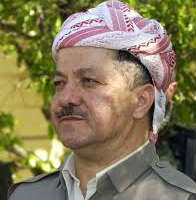
Barzani, a veteran Kurdish nationalist, clearly wants to influence events in Syria, but at the same time he realizes that Turkey is important as a route for oil exports from Iraqi Kurdistan. He has no wish to antagonize Ankara, and may even help by trying to "box in" the PYD.

Turkish Foreign Minister Ahmet Davotoglu recently called on Barzani in Irbil, and they "emphasized that any attempt to exploit the power vacuum by any violent group or organization (in Syria) will be considered as a common threat," a not-so-veiled warning to the PYD.

Another element in this explosive regional equation is the strained relationship between the Iraqi Kurds and Iraq's central government. The Kurds are increasingly at odds with the Shiite government led by Nuri al-Maliki in Baghdad, and so is Turkey, according to Cagaptay.

Reports from the border area say the Kurdish peshmerga patrolling the Syrian border are sometimes just a few hundred yards from regular Iraqi troops.
However the Syrian revolt unfolds, "the experience of the Syrian Kurds will have an influence on Iran's Kurds and Turkey's Kurdish population," said Cakir, who is a senior correspondent for the Vatan newspaper.

For the PKK, Syria provides an opportunity -- and possibly another front against Turkey's military. Cakir sees that as adding a new dynamic to Turkish politics.
"The Turkish state has to deal with the PKK in a political way by persuading it to disarm," he told CNN. "This will be very difficult, as previous conflicts such as Northern Ireland have shown. But the Turkish military cannot defeat the PKK."

He added that, "according to conventional wisdom, this is not the time to begin such a political initiative, with presidential elections due in 2014. But we must solve this question as soon as possible or there will be a catastrophe."

Cagaptay agrees that as a new constitution is written in Turkey, the Kurdish issue must be tackled. Turkey's Kurds, he says, may soon look around the region and see that their brethren in Syria and Iraq are better off.

It's widely assumed that Erdogan will run for the presidency in 2014. Cagaptay describes him as "the most powerful elected leader Turkey has ever had, and he has an opportunity to address the Kurdish issue" by advancing autonomy for Turkey's 14 million Kurds.
But for Turkey's substantial nationalist vote, that may be a bridge too far.

http://edition.cnn.com/2012/08/14/world ... index.html
User avatar
brendar
Shaswar
Shaswar
 
Posts: 2073
Joined: Sun Oct 30, 2011 8:28 pm
Highscores: 0
Arcade winning challenges: 0
Has thanked: 948 times
Been thanked: 1382 times

Syrian Kurds get a first taste of freedom

PostAuthor: brendar » Tue Aug 14, 2012 8:39 pm

The Syrian army appears to have withdrawn from northern Kurdish areas near the border with Turkey to focus on securing key cities such as Damascus and Aleppo. For Syria’s Kurds, this has ushered in a period of relative autonomy and newfound freedom.

Syria’s Kurds have been enjoying relative autonomy in northern areas of the country since forces loyal to President Bashar al-Assad withdrew in July to focus on ousting anti-regime rebels from key cities such as the capital, Damascus, and the commercial centre of Aleppo.

Image

More pictures here:
http://www.france24.com/static/infograp ... o_en.html#
User avatar
brendar
Shaswar
Shaswar
 
Posts: 2073
Joined: Sun Oct 30, 2011 8:28 pm
Highscores: 0
Arcade winning challenges: 0
Has thanked: 948 times
Been thanked: 1382 times

Derbasia 14/08/12

PostAuthor: brendar » Tue Aug 14, 2012 8:44 pm

User avatar
brendar
Shaswar
Shaswar
 
Posts: 2073
Joined: Sun Oct 30, 2011 8:28 pm
Highscores: 0
Arcade winning challenges: 0
Has thanked: 948 times
Been thanked: 1382 times

Re: Kurdistan forces are liberating Western Kurdistan

PostAuthor: alan131210 » Tue Aug 14, 2012 9:20 pm

(CNN) -- In the city of Qamishli, on Syria's border with Turkey, neither the forces of the Syrian regime nor the rebels of the Free Syrian Army are to be seen. But visitors say the Kurdish flag is very evident, and Kurdish fighters man checkpoints around the city.
More are being trained in the Kurdish region of KRG.


great news, more and more are been trained and sent back to western Kurdistan. a kurdish region is already established there is no return to the status quo. :-D

According to Salih, who has traveled widely in the region for the International Crisis Group, there is a real risk of conflict between Kurdish factions for control of Qamishli in coming months. It is where the Kurdish National Council is strongest, but the PYD has been making inroads, and there have already been clashes between supporters of the two groups, she said.


this is true, PYD disallows any KNC work in Efrin region while it wants to take over Qamishlo where the KNC is the strongest, that is a hypocrisy that they PYD must avoid and "truly" work with KNC not just by mouth and on paper. the way i see it is, if PYD continues this way, their region will be getting no support while the Hasaka province will get it all, if they want to be truly part of the supreme council then they must abide by their own signatures and be real man (honour their own signatures).

not only that this way they will jeopardize the possible pipeline from KRG to the Mediterranean sea, so their action will affect all kurds in all parts in the long run if they pull any silly mistakes.


It's widely assumed that Erdogan will run for the presidency in 2014. Cagaptay describes him as "the most powerful elected leader Turkey has ever had, and he has an opportunity to address the Kurdish issue" by advancing autonomy for Turkey's 14 million Kurds.
But for Turkey's substantial nationalist vote, that may be a bridge too far.


that is the only way out for turkey, grant NK autonomy and your ass will be saved only.
Last edited by alan131210 on Tue Aug 14, 2012 9:43 pm, edited 4 times in total.
…………………………………………………………

KERKUK is the Heart of Kurdistan
Kurdish state is on the horizon with WK now freed great kurdistan is closing in.
User avatar
alan131210
Shaswar
Shaswar
 
Posts: 9079
Images: 2
Joined: Fri Oct 08, 2010 12:23 am
Location: Kurdistan
Highscores: 0
Arcade winning challenges: 0
Has thanked: 4837 times
Been thanked: 4390 times
Nationality: Kurd

Re: Kurdistan forces are liberating Western Kurdistan

PostAuthor: hevalo27 » Tue Aug 14, 2012 9:30 pm

are they finally withdrawn from qamishli ? ist there any confirmation from the kurdish side ?

hevalo27
Ashna
Ashna
 
Posts: 550
Joined: Mon Jan 30, 2012 1:17 pm
Highscores: 0
Arcade winning challenges: 0
Has thanked: 472 times
Been thanked: 347 times

Re: Kurdistan forces are liberating Western Kurdistan

PostAuthor: brendar » Wed Aug 15, 2012 1:06 am

hevalo27 wrote:are they finally withdrawn from qamishli ? ist there any confirmation from the kurdish side ?


The regime's army are only resided in their stations and they do not approach any kurds. So the kurds are sort of tasting a relative autonomy at the moment. If Aleppo gets controlled by the FSA which i doubt, then the situation in Qamishlo will be much clearer.
User avatar
brendar
Shaswar
Shaswar
 
Posts: 2073
Joined: Sun Oct 30, 2011 8:28 pm
Highscores: 0
Arcade winning challenges: 0
Has thanked: 948 times
Been thanked: 1382 times

PreviousNext

Return to Kurdistan Debates, Articles and Analysis

Who is online

Registered users: Majestic-12 [Bot]

x

#{title}

#{text}