

Twitter: Independent Kurdish TV channel (ARK) launched for #Rojava - now on Zagrostv frequency #TwitterKurds
What is this?

Facebook

Search

Welcome To Roj Bash Kurdistan

Kurdistan forces are liberating Western Kurdistan
 Author: alan131210 » Wed Aug 01, 2012 5:09 pm
Washington is working with the syrian kurdish recruits by Barzani to return them to the theaters of operations in Western Kurdistan
http://translate.google.com/translate?j ... 26kijan%3D
http://translate.google.com/translate?j ... 26kijan%3D
…………………………………………………………
KERKUK is the Heart of Kurdistan
Kurdish state is on the horizon with WK now freed great kurdistan is closing in.
KERKUK is the Heart of Kurdistan
Kurdish state is on the horizon with WK now freed great kurdistan is closing in.
-
alan131210 - Shaswar

- Posts: 9079
- Images: 2
- Joined: Fri Oct 08, 2010 12:23 am
- Location: Kurdistan
- Highscores: 0
- Arcade winning challenges: 0
- Has thanked: 4837 times
- Been thanked: 4390 times
- Nationality: Kurd
Re:
Author: Kurdistano » Wed Aug 01, 2012 5:42 pm
alan131210 wrote: Washington is working with the syrian kurdish recruits by Barzani to return them to the theaters of operations in Western Kurdistan
http://translate.google.com/translate?j ... 26kijan%3D
GREEEAT News

-

Kurdistano - Tuti

- Posts: 1656
- Joined: Thu Sep 02, 2010 3:33 am
- Highscores: 1
- Arcade winning challenges: 0
- Has thanked: 784 times
- Been thanked: 821 times
Re: Kurdistan forces are liberating Western Kurdistan
Author: talsor » Wed Aug 01, 2012 5:56 pm
Mobile network connection been completely cut off all over the Kurdish areas in Syria.
-
talsor - Shaswar
- Donator

- Posts: 5003
- Joined: Mon Mar 24, 2008 3:23 pm
- Highscores: 0
- Arcade winning challenges: 0
- Has thanked: 1636 times
- Been thanked: 2466 times
- Nationality: Kurd
Re: Kurdistan forces are liberating Western Kurdistan
Author: Kurdistano » Wed Aug 01, 2012 6:02 pm
talsor wrote:Mobile network connection been completely cut off all over the Kurdish areas in Syria.
Seems Assad is trying to isolate West Kurdistan from the rest of the world.
-
Kurdistano - Tuti
- Posts: 1656
- Joined: Thu Sep 02, 2010 3:33 am
- Highscores: 1
- Arcade winning challenges: 0
- Has thanked: 784 times
- Been thanked: 821 times
Re: Kurdistan forces are liberating Western Kurdistan
Author: talsor » Wed Aug 01, 2012 6:22 pm
Kurdistano wrote:talsor wrote:Mobile network connection been completely cut off all over the Kurdish areas in Syria.
Seems Assad is trying to isolate West Kurdistan from the rest of the world.
Do not worry , they are already purchesing turkish pre paid Mobile phones
.-
talsor - Shaswar
- Donator
- Posts: 5003
- Joined: Mon Mar 24, 2008 3:23 pm
- Highscores: 0
- Arcade winning challenges: 0
- Has thanked: 1636 times
- Been thanked: 2466 times
- Nationality: Kurd
Al Jazeera tv
Author: alan131210 » Wed Aug 01, 2012 8:00 pm

…………………………………………………………
KERKUK is the Heart of Kurdistan
Kurdish state is on the horizon with WK now freed great kurdistan is closing in.
KERKUK is the Heart of Kurdistan
Kurdish state is on the horizon with WK now freed great kurdistan is closing in.
-
alan131210 - Shaswar
- Posts: 9079
- Images: 2
- Joined: Fri Oct 08, 2010 12:23 am
- Location: Kurdistan
- Highscores: 0
- Arcade winning challenges: 0
- Has thanked: 4837 times
- Been thanked: 4390 times
- Nationality: Kurd
GK tv reporter in NK
Author: alan131210 » Wed Aug 01, 2012 8:02 pm
…………………………………………………………
KERKUK is the Heart of Kurdistan
Kurdish state is on the horizon with WK now freed great kurdistan is closing in.
KERKUK is the Heart of Kurdistan
Kurdish state is on the horizon with WK now freed great kurdistan is closing in.
-
alan131210 - Shaswar
- Posts: 9079
- Images: 2
- Joined: Fri Oct 08, 2010 12:23 am
- Location: Kurdistan
- Highscores: 0
- Arcade winning challenges: 0
- Has thanked: 4837 times
- Been thanked: 4390 times
- Nationality: Kurd
Re: Kurdistan forces are liberating Western Kurdistan
Author: brendar » Wed Aug 01, 2012 9:38 pm

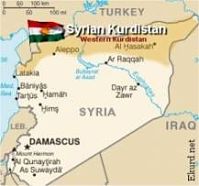
Twitter: More than 50 schools have opened to teach Kurdish Languege in Efrin.
-
brendar - Shaswar
- Posts: 2073
- Joined: Sun Oct 30, 2011 8:28 pm
- Highscores: 0
- Arcade winning challenges: 0
- Has thanked: 948 times
- Been thanked: 1382 times
Re: Kurdistan forces are liberating Western Kurdistan
Author: Saipul » Thu Aug 02, 2012 4:54 am
Nice picture, though using the Latin alphabet for students who don't know it could be difficult.
-

Saipul - Shermin

- Posts: 239
- Joined: Sun Sep 10, 2006 6:24 am
- Highscores: 0
- Arcade winning challenges: 0
- Has thanked: 1 time
- Been thanked: 22 times
Author: alan131210 » Thu Aug 02, 2012 7:17 am
Update: Turkish FM meeting with Barzani expected to see SNC agreement on Syrian Kurdish demands
http://www.aknews.com/en/aknews/4/319804/?AKmobile=true
http://www.aknews.com/en/aknews/4/319804/?AKmobile=true
…………………………………………………………
KERKUK is the Heart of Kurdistan
Kurdish state is on the horizon with WK now freed great kurdistan is closing in.
KERKUK is the Heart of Kurdistan
Kurdish state is on the horizon with WK now freed great kurdistan is closing in.
-
alan131210 - Shaswar
- Posts: 9079
- Images: 2
- Joined: Fri Oct 08, 2010 12:23 am
- Location: Kurdistan
- Highscores: 0
- Arcade winning challenges: 0
- Has thanked: 4837 times
- Been thanked: 4390 times
- Nationality: Kurd
Re: Al Jazeera tv
Author: kardox » Thu Aug 02, 2012 1:02 pm
alan131210 wrote:http://www.youtube.com/watch?v=AlHETokylaE&feature=g-all-u
this woman should be kick out of Kurdistan for calling it northerniraq..
Ham chinaar, ham chighaal, ham zinaar
chee buu Rustamee kurree Zaal
Amr kir seesit u shesht saal
Amr kir seesit u shesht saa
Heezh bichuuka, t'ifaal,
Daayee himbees kir, bira maal
chee buu Rustamee kurree Zaal
Amr kir seesit u shesht saal
Amr kir seesit u shesht saa
Heezh bichuuka, t'ifaal,
Daayee himbees kir, bira maal
-

kardox - Ashna

- Posts: 603
- Images: 8
- Joined: Sat May 28, 2005 1:42 am
- Highscores: 0
- Arcade winning challenges: 0
- Has thanked: 71 times
- Been thanked: 140 times
- Nationality: Kurd
Autonomy Awaits Syrian Kurds, but has its Challenges
Author: alan131210 » Thu Aug 02, 2012 1:39 pm
02/08/2012
ERBIL, Kurdistan Region – While some international experts believe autonomy is the best route for Kurds in a post-Assad Syria, they also warn that Kurds must not become implicated in the conflict and need to build a secure region as was done in Iraqi Kurdistan.
Recently, several Syrian Kurdish cities were liberated from the regime of President Bashar al-Assad. At the same time, the Kurdistan Region has become a second home for Syrian Kurdish refugees. According to reports, nearly 11,000 Syrians have arrived to the Kurdistan Region.
With these developments, the world media has speculated that “another Kurdistan” is in the making.
Professor Michael M. Gunter from Tennessee Tech University feels autonomy is best for the Kurds in Syria in the long-term.
“The Kurds are mainly based in northern Syria and are minorities,” Gunter said. “Even though they have a long way to go, autonomy would be best for them.”
In the meantime, situations in the regions surrounding Syrian Kurdistan have attempted to influence how the area will be shaped if and when the regime falls.
Iraqi Prime Minister Nuri al-Maliki sent the Iraqi Army to areas along the Syrian border that have been controlled by the Kurdistan Region, forcing a standoff with Kurdish Peshmerga forces in disputed territory.
In an interview with Al Jazeera, Kurdistan Region President Massoud Barzani confirmed that a training camp exists in the Kurdistan Region where Syrian Kurdish soldiers are being prepared before returning to defend Kurdish territory in Syria. The president’s statements angered pro-Assad factions in Iraq.
Barzani was clear that the desire was to protect Kurdish unity in Syria. “The best support we can provide is to have a united position, and we have been successful in that as well,” he said.
In mid-July, Barzani mediated between the major Kurdish factions in Syria – the Kurdish National Council (KNC) and Democratic Union Party (PYD) -- to produce the Erbil Agreement, a power-sharing agreement which has maintained peace in the liberated Kurdish cities since the Assad regime withdrew from them.
Pressure is also coming from the north. According to a report from the Turkish newspaper Hurriyet, Ankara feels threatened by the idea that Kurdistan Workers’ Party (PKK) fighters are entering the Kurdish regions of Syria.
In turn, Turkey has sent a few thousand soldiers to its border with Syria. The Turkish state says it is not against Kurdish rights in Syria, but against the idea that the PKK is controlling Kurdish regions.
The PYD, who has been controlling the liberated areas in Syria, has ties to the PKK.
Moreover, even though a Kurdish Supreme Committee was formed last week, with an equal number of members from the KNC and PYD, a British expert thinks internal conflicts and lack of common vision for the Kurdish future in Syria remain a problem.
“Because there are a lot of different views, there are a lot of possibilities that the Kurdish vision for the new Syria won’t be united,” said Bill Park, a lecturer in defence studies at London’s King’s College.
“Some will want to form an alliance with other parties, and others will want autonomy,” he said.
Park added, “The Kurds should protect their region and not caught up with the Arab conflict and build a secure region like Iraqi Kurdistan.”
Rudaw
ERBIL, Kurdistan Region – While some international experts believe autonomy is the best route for Kurds in a post-Assad Syria, they also warn that Kurds must not become implicated in the conflict and need to build a secure region as was done in Iraqi Kurdistan.
Recently, several Syrian Kurdish cities were liberated from the regime of President Bashar al-Assad. At the same time, the Kurdistan Region has become a second home for Syrian Kurdish refugees. According to reports, nearly 11,000 Syrians have arrived to the Kurdistan Region.
With these developments, the world media has speculated that “another Kurdistan” is in the making.
Professor Michael M. Gunter from Tennessee Tech University feels autonomy is best for the Kurds in Syria in the long-term.
“The Kurds are mainly based in northern Syria and are minorities,” Gunter said. “Even though they have a long way to go, autonomy would be best for them.”
In the meantime, situations in the regions surrounding Syrian Kurdistan have attempted to influence how the area will be shaped if and when the regime falls.
Iraqi Prime Minister Nuri al-Maliki sent the Iraqi Army to areas along the Syrian border that have been controlled by the Kurdistan Region, forcing a standoff with Kurdish Peshmerga forces in disputed territory.
In an interview with Al Jazeera, Kurdistan Region President Massoud Barzani confirmed that a training camp exists in the Kurdistan Region where Syrian Kurdish soldiers are being prepared before returning to defend Kurdish territory in Syria. The president’s statements angered pro-Assad factions in Iraq.
Barzani was clear that the desire was to protect Kurdish unity in Syria. “The best support we can provide is to have a united position, and we have been successful in that as well,” he said.
In mid-July, Barzani mediated between the major Kurdish factions in Syria – the Kurdish National Council (KNC) and Democratic Union Party (PYD) -- to produce the Erbil Agreement, a power-sharing agreement which has maintained peace in the liberated Kurdish cities since the Assad regime withdrew from them.
Pressure is also coming from the north. According to a report from the Turkish newspaper Hurriyet, Ankara feels threatened by the idea that Kurdistan Workers’ Party (PKK) fighters are entering the Kurdish regions of Syria.
In turn, Turkey has sent a few thousand soldiers to its border with Syria. The Turkish state says it is not against Kurdish rights in Syria, but against the idea that the PKK is controlling Kurdish regions.
The PYD, who has been controlling the liberated areas in Syria, has ties to the PKK.
Moreover, even though a Kurdish Supreme Committee was formed last week, with an equal number of members from the KNC and PYD, a British expert thinks internal conflicts and lack of common vision for the Kurdish future in Syria remain a problem.
“Because there are a lot of different views, there are a lot of possibilities that the Kurdish vision for the new Syria won’t be united,” said Bill Park, a lecturer in defence studies at London’s King’s College.
“Some will want to form an alliance with other parties, and others will want autonomy,” he said.
Park added, “The Kurds should protect their region and not caught up with the Arab conflict and build a secure region like Iraqi Kurdistan.”
Rudaw
…………………………………………………………
KERKUK is the Heart of Kurdistan
Kurdish state is on the horizon with WK now freed great kurdistan is closing in.
KERKUK is the Heart of Kurdistan
Kurdish state is on the horizon with WK now freed great kurdistan is closing in.
-
alan131210 - Shaswar
- Posts: 9079
- Images: 2
- Joined: Fri Oct 08, 2010 12:23 am
- Location: Kurdistan
- Highscores: 0
- Arcade winning challenges: 0
- Has thanked: 4837 times
- Been thanked: 4390 times
- Nationality: Kurd
Re: Kurdistan forces are liberating Western Kurdistan
Author: alan131210 » Thu Aug 02, 2012 5:16 pm
US gives Turkey a "warning" over piling up its forces on the syrian border and urged turkey not to send in troops into syria but only to protect its borders
http://www.radionawxo.org/kurdi/index.p ... s.facebook
http://www.radionawxo.org/kurdi/index.p ... s.facebook
…………………………………………………………
KERKUK is the Heart of Kurdistan
Kurdish state is on the horizon with WK now freed great kurdistan is closing in.
KERKUK is the Heart of Kurdistan
Kurdish state is on the horizon with WK now freed great kurdistan is closing in.
-
alan131210 - Shaswar
- Posts: 9079
- Images: 2
- Joined: Fri Oct 08, 2010 12:23 am
- Location: Kurdistan
- Highscores: 0
- Arcade winning challenges: 0
- Has thanked: 4837 times
- Been thanked: 4390 times
- Nationality: Kurd
Author: alan131210 » Thu Aug 02, 2012 6:14 pm
Urgent: "turkish FM met with KNC and SNC without PYD in Erbil just few hours ago"
…………………………………………………………
KERKUK is the Heart of Kurdistan
Kurdish state is on the horizon with WK now freed great kurdistan is closing in.
KERKUK is the Heart of Kurdistan
Kurdish state is on the horizon with WK now freed great kurdistan is closing in.
-
alan131210 - Shaswar
- Posts: 9079
- Images: 2
- Joined: Fri Oct 08, 2010 12:23 am
- Location: Kurdistan
- Highscores: 0
- Arcade winning challenges: 0
- Has thanked: 4837 times
- Been thanked: 4390 times
- Nationality: Kurd
Return to Kurdistan Debates, Articles and Analysis
Who is online
Registered users: Bing [Bot]